
Bench Warrants in St. Bernard Parish
In St. Bernard Parish, a bench warrant is a judge's tool, not a new criminal charge. Something the court already ordered went undone. Most often, a required appearance was missed. The original case keeps its place on the docket. What changes is that the judge now has the power to have you brought in. That distinction should shape your calls. The District Attorney can explain what setting was missed, and the Clerk of Court can pull the case up in the index. Neither office controls the warrant itself. Only the issuing judge, or the court that set the date, can say what the warrant demands and what the court wants next. Clearing a bench warrant does not close the underlying case, and the charge stays exactly where it was.
How Article 333 Creates St. Bernard Parish Bench Warrants
Article 333 lays out a short, specific sequence for a St. Bernard Parish bench warrant. A court sets a required appearance. Notice is expected, and the Clerk records it. When the person does not appear, the court issues a warrant for arrest on its own motion or on the prosecutor's. The Clerk then sends statutory notices to the prosecutor, the defendant, and any surety. The statute also requires the Clerk to place proof, or a certificate of service, in the record. That notice trail matters if you later argue you were never told. The current text of Article 333 spells out both the notice and the certificate requirements.
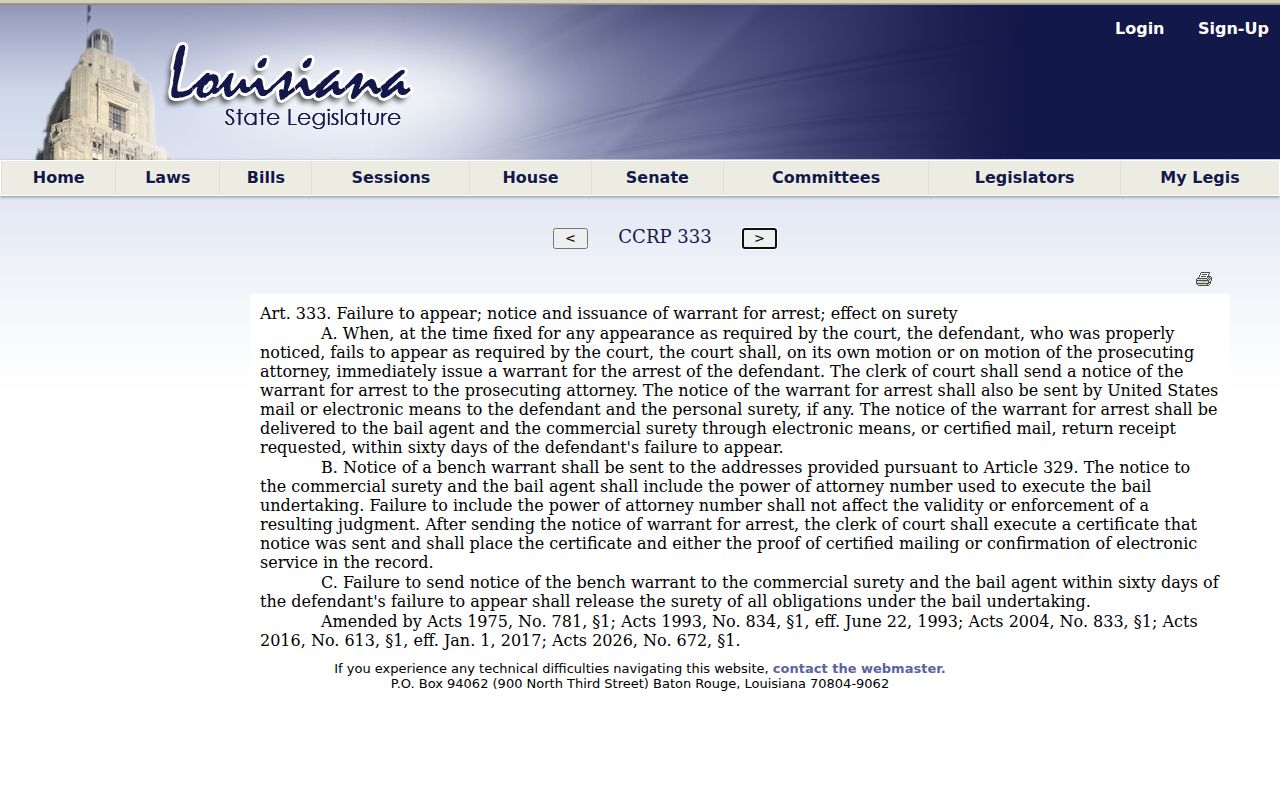
St. Bernard Parish readers should read the statute itself before calling, since the court will lean on that notice language.
How a Bench Warrant Is Issued
The signing judge sits in the court where the appearance was required. A district criminal case means the 34th Judicial District Court in Chalmette. A justice of the peace matter goes back to the ward court. A traffic case belongs to the court printed on the citation. From there, the bench warrant travels the same path as an arrest warrant. It goes to peace officers, and under Article 204 an authorized officer can execute it in any parish. A missed date in St. Bernard Parish can therefore end with an arrest far from the parish. That is why settling the warrant's status early is worth the call.
St. Bernard Parish Bench Warrants and the Duty Judge
Local rules give the 34th Judicial District Court's duty judge real operational weight in St. Bernard Parish. That judge acts as committing magistrate for criminal matters, sets bail, handles matters involving people in custody, and authorizes search and arrest warrants. A monthly rotation moves the assignment through the court's divisions. The court posts that rotation on its magistrate page, which shows which division holds the duty month.
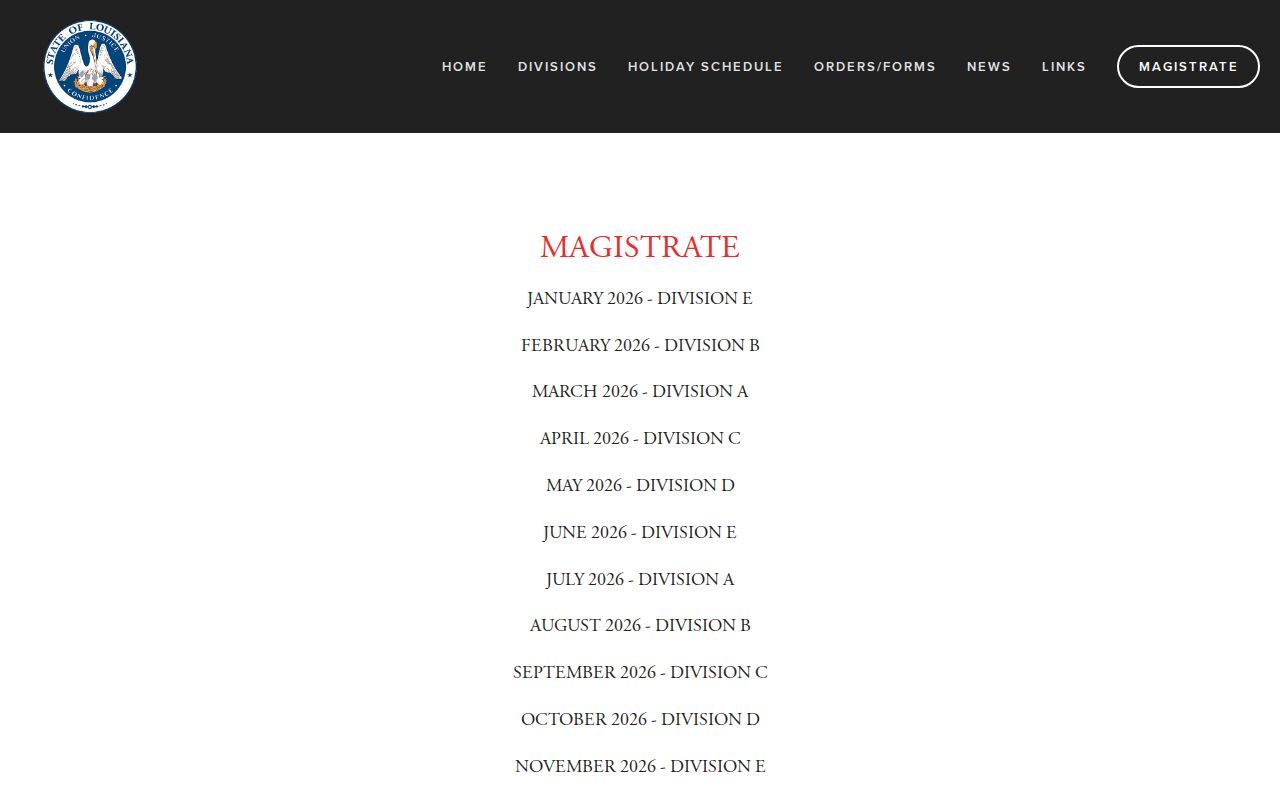
The rotation tells you which St. Bernard Parish division handles criminal intake this month. It says nothing about whether a particular warrant exists. Bond settings for people in custody appear as dated postings on the District Attorney's Magistrate Court and Bond Settings page.
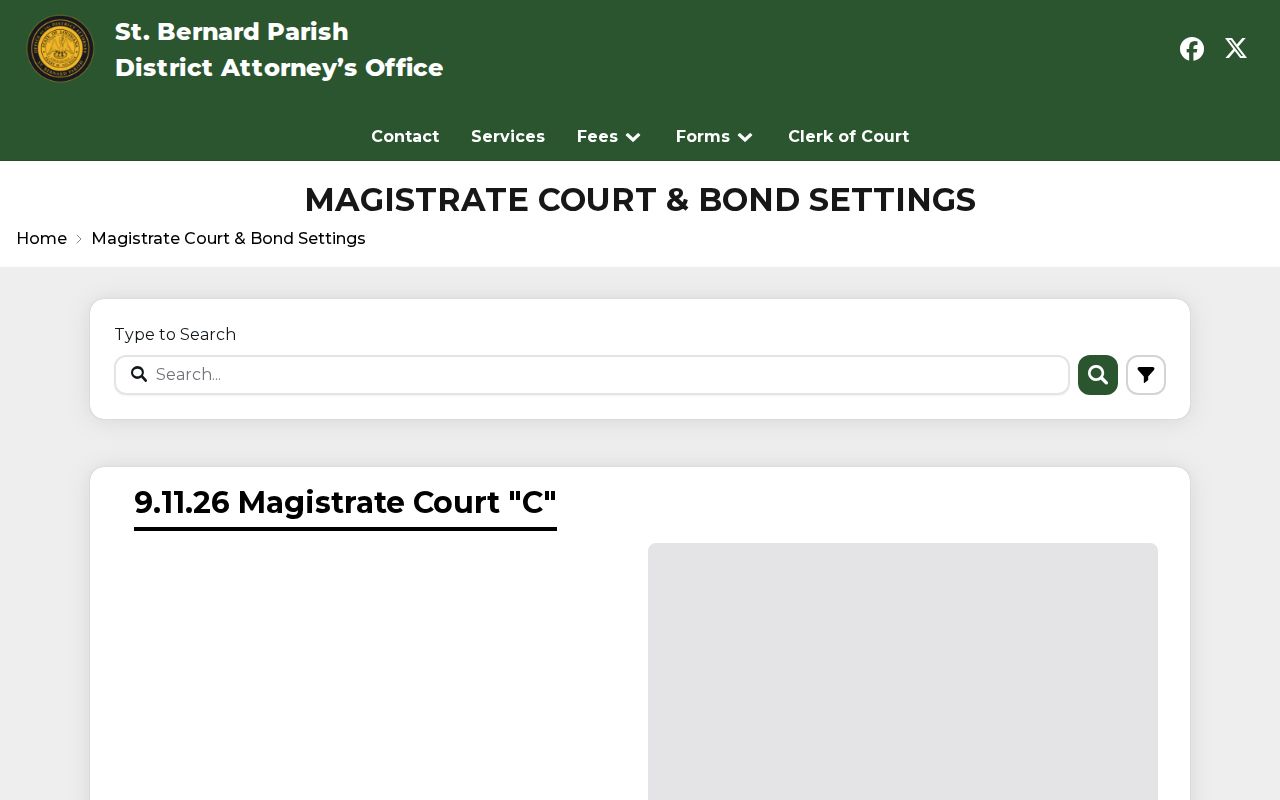
Those postings only show what the court handled on a given day. They are not a bond schedule or a warrant list for St. Bernard Parish.
Bench Warrant vs Arrest Warrant
Both papers authorize an arrest. People in St. Bernard Parish use the two terms loosely for that reason. Where each one starts is the real difference. An arrest warrant grows out of a sworn complaint and a probable cause finding. A bench warrant grows out of a court order that was ignored. That difference decides who you call next.
| Point | Bench Warrant | Arrest Warrant |
|---|---|---|
| Trigger | A missed appearance or another violation of a court order | A complaint affidavit and a probable cause finding |
| Authority | Article 333 and the court's contempt power | Articles 202 and 203 |
| Case status | The original case is already open | The case begins with the charge |
Note: Both warrant types can be live at once in St. Bernard Parish, so finding one does not rule out the other.
A St. Bernard Parish Bench Warrant Is Not a Capias
Louisiana statutes speak of warrants and bench warrants. Capias is a term from other states. It also appears in some older local records, but it is not the default label in current St. Bernard Parish materials. The same caution covers capias pro fine, a writ some places issue when an unpaid fine is treated on its own. If a record in your hands says capias, keep the exact wording. Route the question to the issuing court instead of assuming anything. An unpaid fine here does not automatically create a fine-collection writ.
How to Resolve a St. Bernard Parish Bench Warrant
Resolution starts with the issuing court, not with a payment. Ask what the court wants: an appearance, a written motion to recall, a bond, or a surrender. The 34th Judicial District Court's forms page publishes no warrant recall form. In St. Bernard Parish, the procedure has to come from the court or from counsel.
Caution: A bench warrant can be recalled by the issuing magistrate under Article 202(H), and that is not the same as paying a fine or clearing a docket entry. Confirm the required step in writing.
A warrant missed in a lower court works the same way one level down. The parish warrant records overview covers the steps for dealing with a warrant on your own name in St. Bernard Parish, including when to bring in an attorney.
St. Bernard Parish Bench Warrant Notice Comes From the Clerk
Notice is built into the record, not left to chance. The St. Bernard Parish Clerk mails the statutory notices or serves them electronically, then files proof of service with the case. That paper trail matters. If no one ever told you about a court date, ask the Clerk for the certificate first.
- Failure to appear
- Missing a required setting after proper notice, which is the event Article 333 addresses.
- Bench warrant notice
- The statutory notice the Clerk sends to the prosecutor, the defendant, and any surety.
- Certificate of service
- The Clerk's proof that the required notices were sent, filed with the record.
- Surety
- A person or company that posted bail, which is why a bail agent may also receive notice.
Which St. Bernard Parish Court Issued It
Call the court that set the date. That office holds the bench warrant. In St. Bernard Parish, a district criminal matter belongs to the 34th Judicial District Court, whose divisions run A through E, with a duty judge handling criminal intake. Civil and small-claims cases sit elsewhere. Those go to the 44th Justice of the Peace ward court. If a state agency wrote the citation instead of a local officer, the notice still names the court to call. Traffic failures to appear follow the same route, and the statute treats them separately.
How St. Bernard Parish Civil Warrants Differ From Bench Warrants
St. Bernard Parish justice of the peace pages use the word warrant in a civil sense. There it means enforcing an eviction order, not arresting anyone. That process runs between private parties. It is not a criminal bench warrant. If you hold a civil order, call the issuing ward and give the civil case number. If a criminal bench warrant is the problem, call the court that set the appearance.